
인더스트리 4.0을 위한 증강 현실
우리의 동적 3D 증강 현실 시스템은 매우 광범위한 산업에서 고객을 만족 시킵니다. 우리의 특별을 기술을 통해 어떠한 작업 환경에서도 매우 쉽고 간단하게 적용할 수 있습니다. 예를 들어 빠른 사이클 타임, 매우 복잡한 부품 구성 등에 대해서도 효율적으로 우리의 기술을 응용할 수 있습니다.






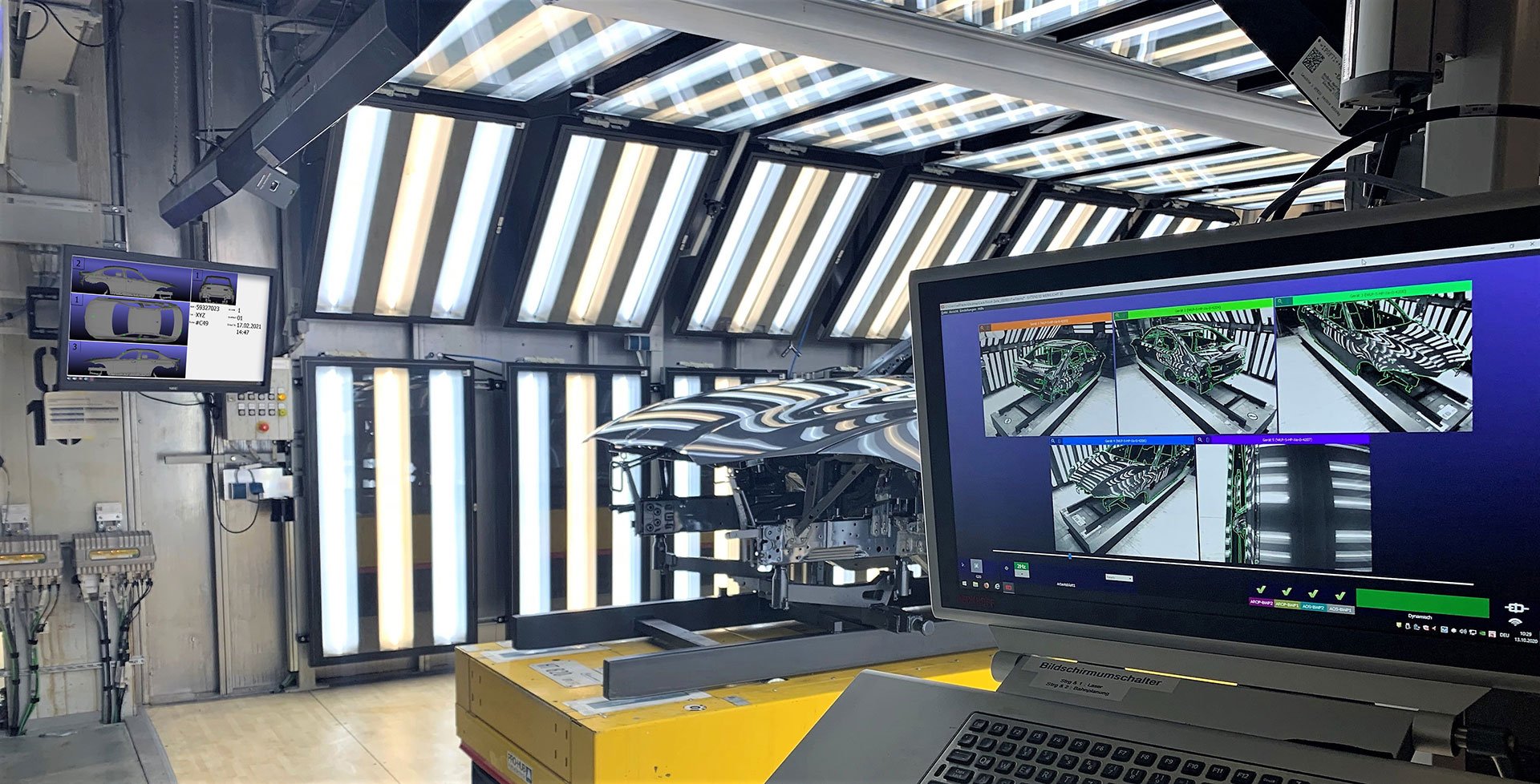
The final inspection and quality testing of complex, three-dimensional components still poses great challenges for production employees, especially in series production with particularly short cycle times. Not only in terms of the time within which these are carried out, but above all in terms of the ergonomics of the workplace itself. Within a very short time, workers have to manually inspect and rework very large, three-dimensional components. We have taken on the solution to this problem and developed a suitable dynamic laser projection process, taking into account a wide range of factors, including time, quality and ergonomics. This innovative laser projection process is already being used successfully in the BMW paint shop. Here, areas to be reworked are projected over the entire car. For this purpose, a network of five WERKLICHT projectors works together in each finishing booth. The outer skin of the car body is divided into clearly defined projection areas, each of which is assigned to a projector. The individual projectors are coordinated and controlled by a local analog PC located next to the finishing booth. Another important innovation for the project was our WERKLICHT software.
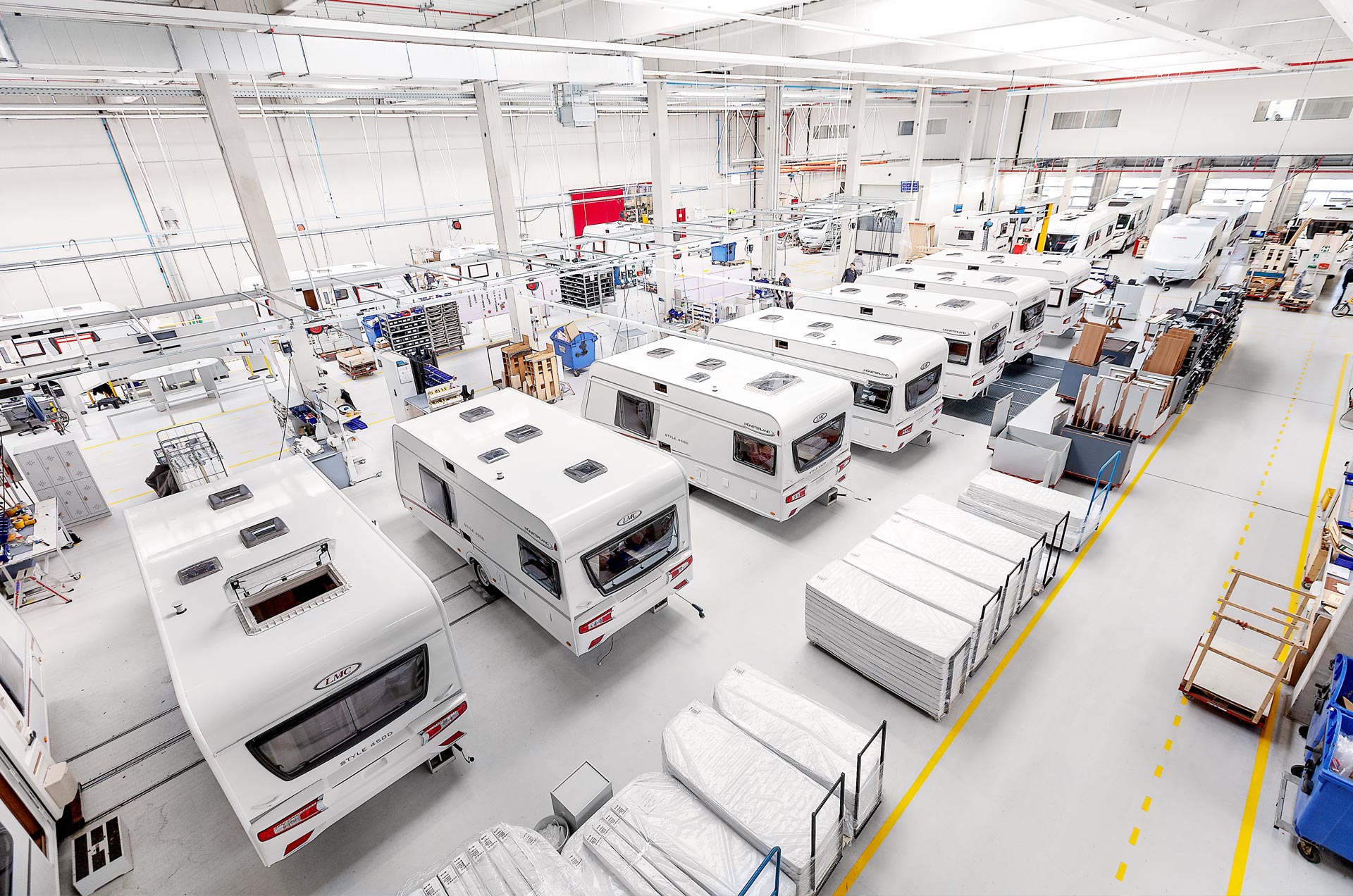
Criteria such as quality, effectiveness and workplace ergonomics enjoy the highest priority in the context of caravan production at LMC (Lord Münster Caravan). LMC’s goal is always to optimize processes in production. Since 2017, the caravan manufacturer has been using our WERKLICHT 3D software in conjunction with our WERKLICHT Video hardware on three production lines to manufacture sandwich elements. In the decision on the part of LMC in favor of our solution, referencing in particular played an important role, as our software projects the reference points onto the table via crosshairs. This image or the crosshairs make it easier for the production staff in particular to place the components, in this case the sandwich elements, exactly. Since the integration of the video projection in conjunction with the WERKLICHT 3D software, not only has the workstation become much more user-friendly, but above all the same level of quality can be guaranteed at all times. Another highlight within the application of WERKLICHT 3D is the photo documentation.
Siemens has already been relying on our dynamic laser system in locomotive construction for years. In search of a more flexible solution and a replacement for heavy and bulky aluminum stencils, as well as taking into account the optimization of quality and workflows, the decision was made very quickly to purchase our WERKLICHT system. Not only the ease of use of our system was convincing, but also numerous other advantages: The expensive production of new positioning templates was no longer necessary. As a result, the costs for the corresponding maintenance and storage of the bulky templates were also eliminated. And the employee no longer had to transport the heavy and very large templates to the workpiece and place them there, which was not only an enormous effort for the worker each time, but could also lead to quality losses.
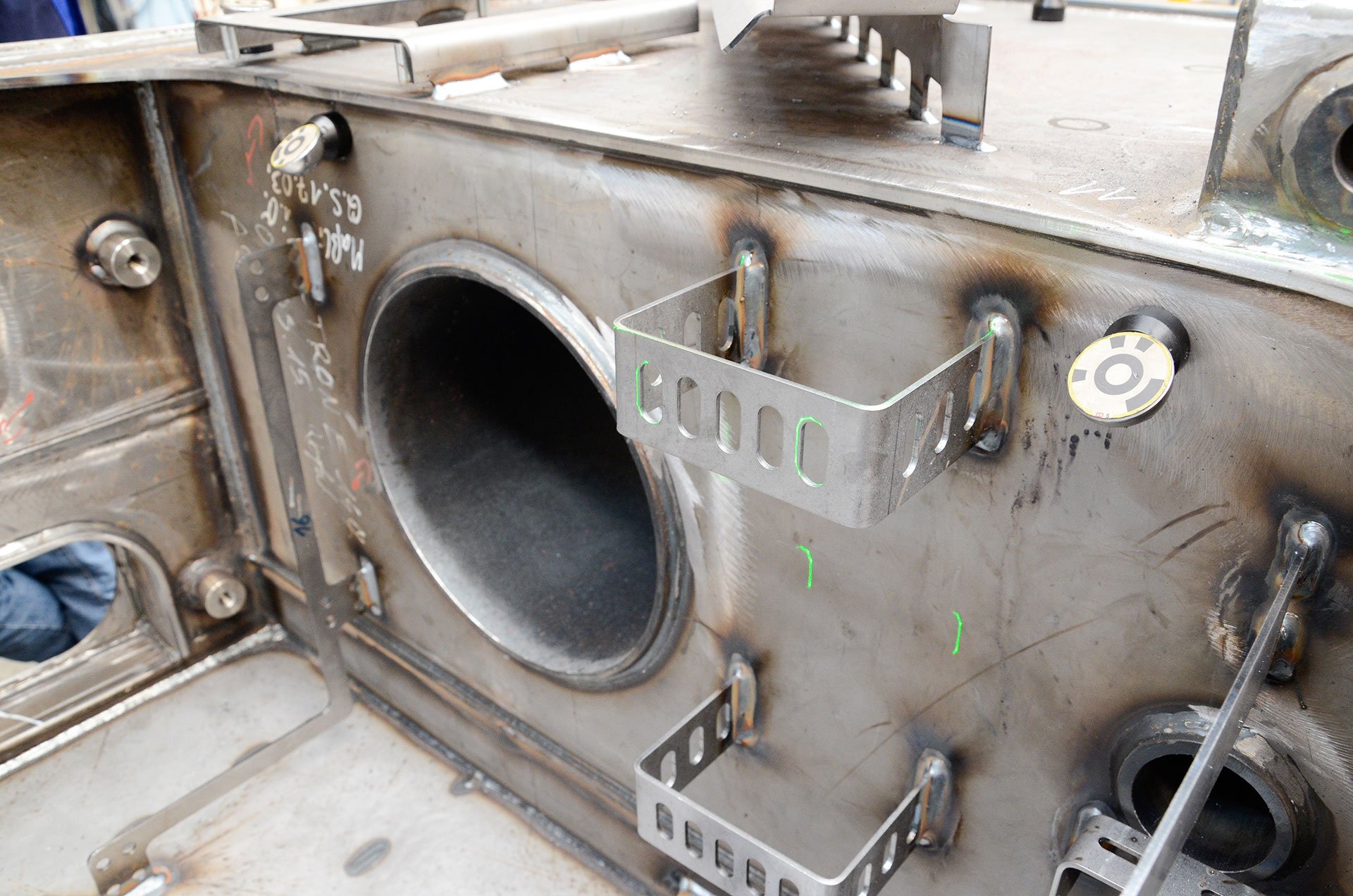
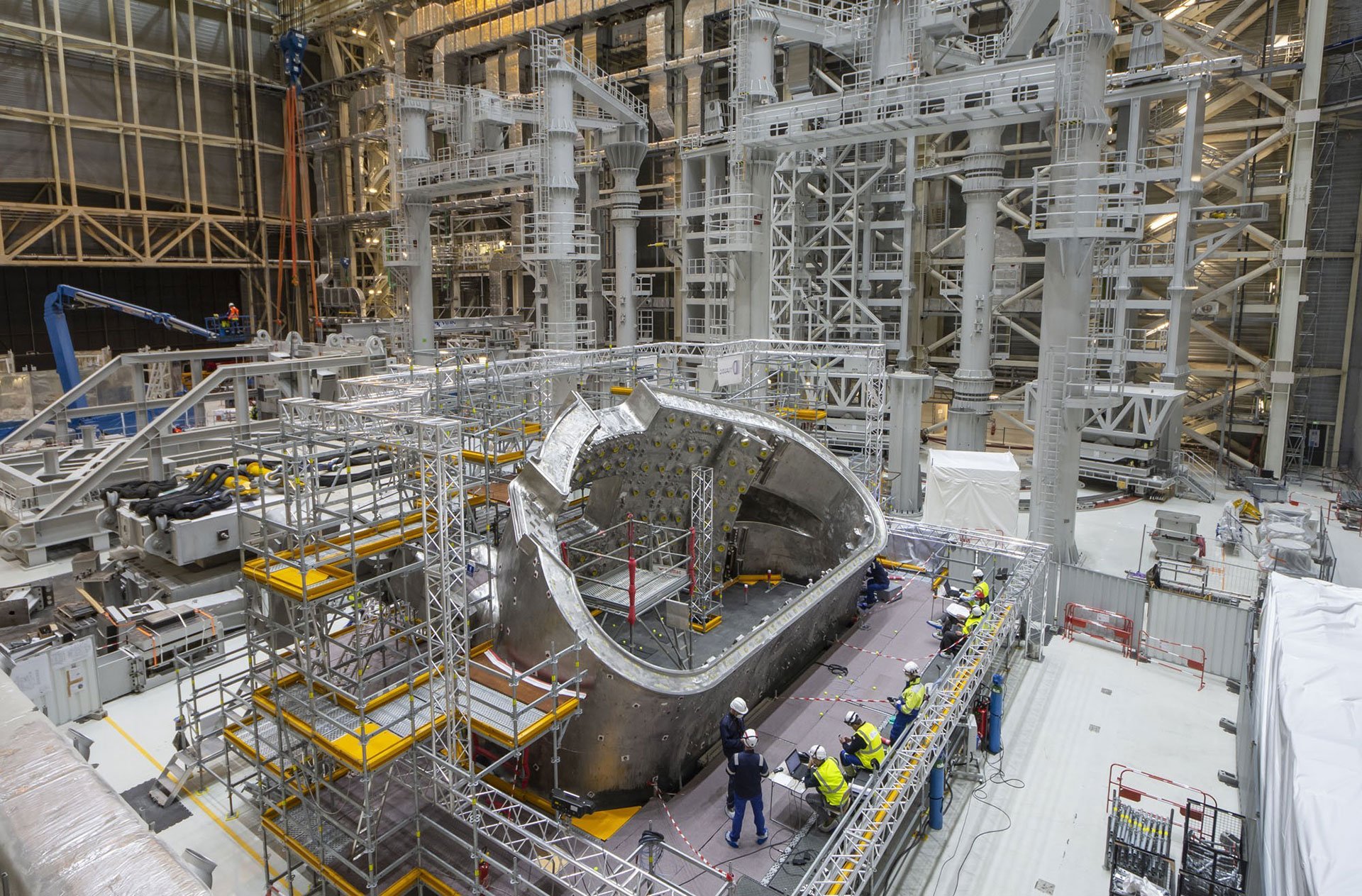
ITER is an international research project and one of the most challenging energy projects in the world. In southern France, 35 nations are working together to build a nuclear fusion reactor with the long-term goal of generating safe electricity from nuclear energy.
ITER will be the world’s largest reactor based on the tokamak principle. At the heart of this tokamak reactor is a donut-like vacuum chamber or vessel. The particular challenge in building this chamber: to accurately place 150,000 attachments and sensors with less than 4 mm tolerance in this vacuum chamber, which is the size of a house. Due to the complex and curved shape of these vessels, conventional methods of marking, such as measuring from existing features or using templates, were not an option for ITER. A team of specialists from ITER and the European Domestic Agency (Fusion for Energy) researched various alternatives and concluded that laser projection was the most appropriate technology. A technique that does not involve burning a mark onto the component, but instead projects one with an eye-safe laser (laser class 2M). The welder then simply positions the part according to the projection. As with all emerging technologies, there are relatively few suppliers of laser projection systems. Because operation of the devices in a realistic environment was critical, the ITER / Fusion for Energy team evaluated two systems using a vacuum vessel model.
After quantitative metrological tests as well as qualitative usability tests, our WERKLICHT Pro L proved to be the most suitable for use at ITER. You can read the full story of why ITER chose us as the perfect solution provider and our WERKLICHT here. (Source: Iter)
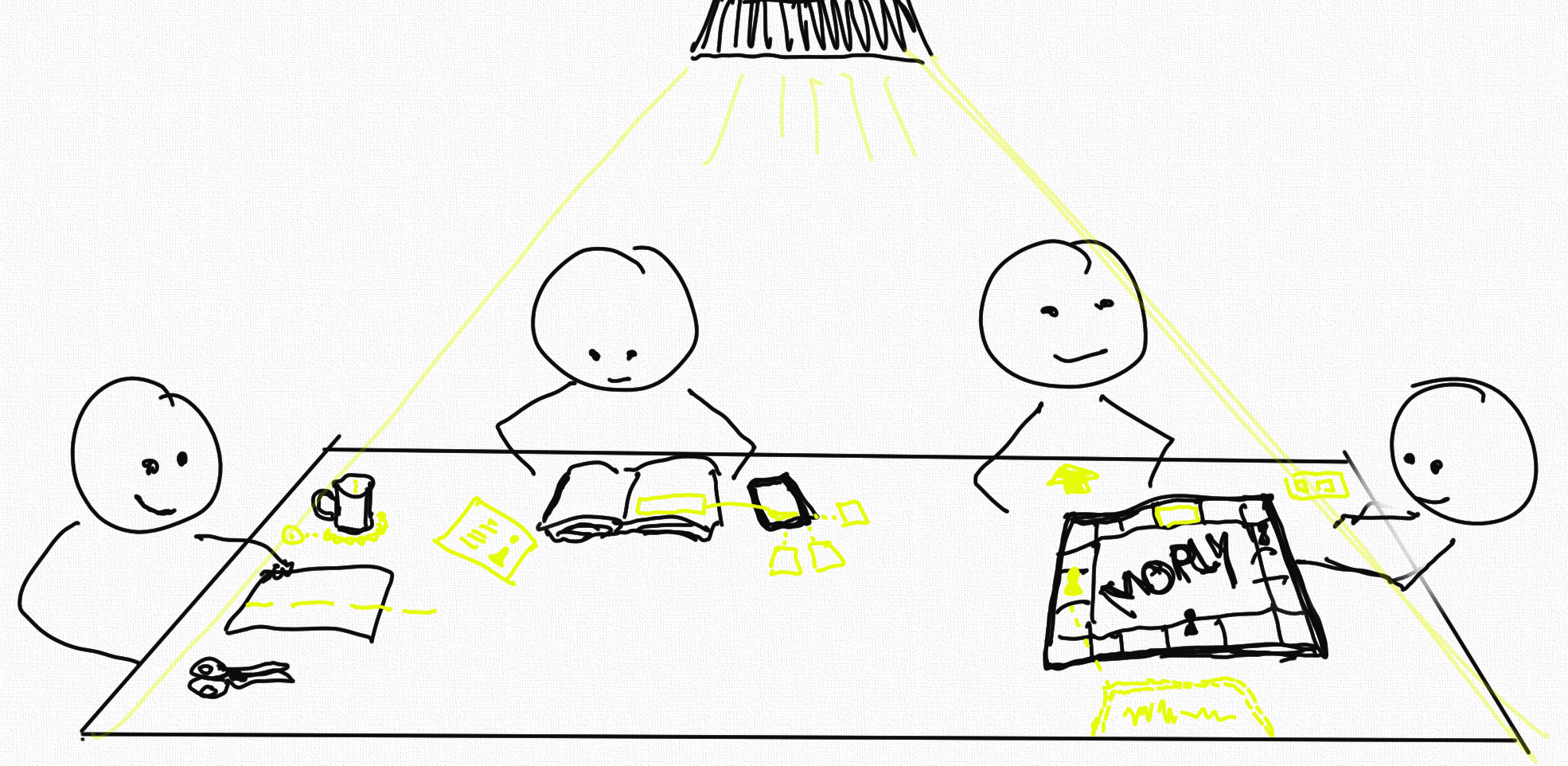
In the research project “VIGITIA” (Networked Intelligent Objects through, on and around interactive tables in everyday life), we are working with the University of Regensburg and Bauhaus University Weimar to develop an intelligent lamp that projects information and digital tools onto dining tables, desks or work surfaces such as a workbench. The system is designed to recognize “intelligent” and “less intelligent” objects and integrate them into the interaction at the table – from smartphones to spoons to tools. However, the tables themselves are hardly changed in the process. The goal of this research project is therefore to make analog objects more intelligent in the context of a table. Specifically, this means opening up interactive tables to support everyday activities for commercial and scientific practice by identifying and solving, among other things, user requirements and usage contexts as well as technical challenges such as projection onto table surfaces and non-planar objects under everyday conditions or even the seamless and intuitive linking of existing “smart devices” (tablets, etc.) with the interactive table. However, this does not involve adding embedded electronics to individual objects. Instead, projective augmented reality (projective AR or PAR for short) is used. We at EXTEND3D are focusing on research and development on projective augmented reality and object tracking in this project. For more information about the project, please visit http://www.vigitia.de
문의하기
(주)아토텍
경남 김해시 김해대로2694번길 25
+82-51-331-0512
hyc225@attotech.co.kr
기술영업부/ 상무이사/ 이춘권
* 개인 정보 보호 정책에 유의하십시오